Are you starting to look around your house and wonder if it still fits the way you live today? If you have spent years in a larger home in Powell, that question can bring up a mix of emotions, from relief to uncertainty. The good news is that downsizing does not have to feel rushed or overwhelming. With a clear plan, you can simplify the process, protect your peace of mind, and make a move that truly supports your next chapter. Let’s dive in.
Why downsizing makes sense in Powell
Powell is a community where many homeowners stay for the long term. U.S. Census QuickFacts shows an 88.0% owner-occupied housing rate, a median owner-occupied home value of $561,500, and 17.6% of residents age 65 and over. That makes downsizing a very real conversation for many local owners who may be living in homes that once fit perfectly, but now ask for more time, upkeep, or space than they need.
Powell’s housing mix also helps explain why this topic matters. The Delaware County Regional Planning Commission reports that 69.5% of housing is single-family and 30.5% is multi-family. If you own a detached home, you may be weighing whether to stay in Powell in a lower-maintenance home style or choose a different setup that better matches your routine.
Start with your reason for moving
Before you sort a closet or call a mover, get clear on why you want to downsize. That reason will shape every decision that follows, from timing to home type to how much work you want to do before listing. When your goals are clear, the process feels much more manageable.
National seller trends show several common reasons people move. According to the 2025 NAR Generational Trends report, sellers most often moved to be closer to friends or family, because the home was too small, or because it was too large. The same report shows Baby Boomers made up the largest share of sellers, and older sellers were the most likely to downsize in home size.
For many Powell homeowners, the goal is not simply to move into something smaller. It is to create a home that is easier to live in day to day. That could mean less cleaning, fewer stairs, lower outdoor maintenance, or being closer to the people and support systems that matter most to you.
Questions to ask yourself first
- Do you want less maintenance, less space, or both?
- Do you want to stay in Powell or move nearby?
- How important is one-floor living?
- Do you want a home with fewer exterior responsibilities?
- Are you hoping to be closer to family, activities, or support services?
- Do you want to move soon, or are you planning ahead for the next few years?
Build your downsizing roadmap
A successful move usually happens in stages, not all at once. Breaking it into simple steps can help you stay focused and reduce stress.
Step 1: Define your must-haves
Make a short list of what your next home needs to support your daily life. Think about layout, maintenance, storage, parking, and how you want to use the space. Keep the list practical and focused on how you live now, not how you lived ten years ago.
This is also the time to think about what you no longer want. A large yard, extra bedrooms, or multiple levels may have made sense before, but they may not be worth the effort now. Your next home should fit your routine, not create more work for you.
Step 2: Declutter in phases
One of the biggest challenges in downsizing is that your next home may not have room for everything. AARP notes that decluttering is a core part of downsizing and can feel overwhelming. That is why a phased approach works so well.
Try sorting room by room using five simple categories:
- Keep
- Donate
- Sell
- Recycle
- Discard
Start with the easiest spaces first, such as a linen closet or guest room. Small wins create momentum. Then move into more personal areas once you have a system that feels comfortable.
Step 3: Compare your current home honestly
Downsizing is easier when you look at your current home through the lens of daily function. The National Institute on Aging recommends a room-by-room safety review, including better lighting, secured carpets, grab bars, and nonslip surfaces. Even if you are not moving right away, this kind of review can help you decide whether your current home still fits your needs.
Ask yourself practical questions. Are there stairs you use less often now? Are bathrooms easy to navigate? Do certain chores feel harder than they used to? These answers can help you decide whether to stay a little longer, update your current setup, or move to a home that requires less effort.
Step 4: Prepare your home for the market
Once you know a move is likely, focus on what will help your current home show well without creating unnecessary work. The 2025 NAR seller data shows that sellers most want help with marketing the home, pricing it competitively, selling within a specific timeframe, and identifying improvements that add value. The same report found that 90% of sellers used an agent or broker, and the median time on market was 3 weeks.
That tells you something important. Good preparation and strong marketing matter. Instead of trying to do everything, focus on the updates and presentation steps that create the best return in time, effort, and buyer appeal.
A thoughtful prep plan may include:
- Decluttering visible surfaces and storage areas
- Completing minor repairs
- Refreshing key spaces where needed
- Planning staging or furniture adjustments
- Scheduling photography and showing preparation
- Coordinating timing with your next move
Explore right-sized home options in Powell
In Powell, downsizing does not mean you only have one path. The better question is which home type best supports your routine, mobility, and upkeep preferences. That shift in thinking can open up more useful options.
Ranch homes and one-floor living
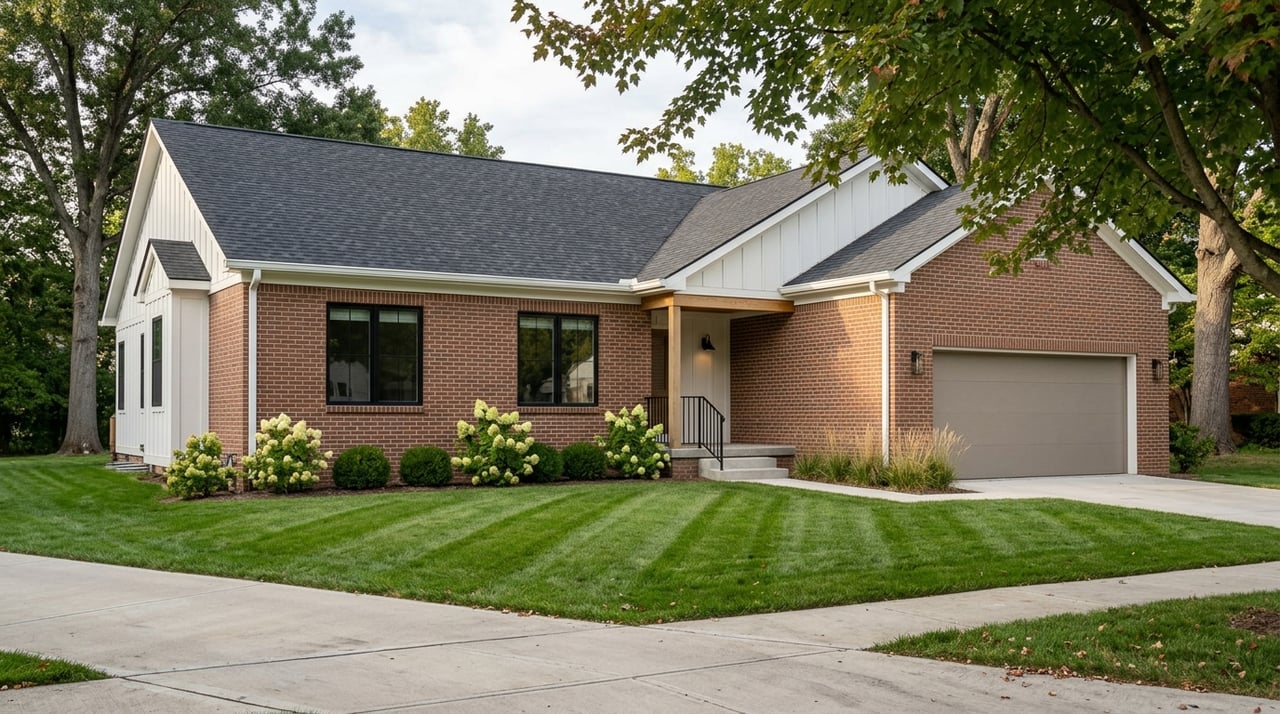
If stairs have become less appealing, a ranch-style home may be the right fit. The local market includes options like the Villas at Scioto Meadows, a boutique ranch-home community with two-bedroom-plus-den and three-bedroom floor plans. For many homeowners, one-floor living offers a simpler daily setup with less strain and less unused space.
Townhomes and condos
Some homeowners want to stay in Powell but reduce exterior maintenance and overall square footage. Townhomes and condos can offer that middle ground. Local examples include Powell Green’s townhomes in historic downtown Powell and Stone Bridge at Golf Village, a condo community established in 2002.
These options may appeal to you if you want a more manageable footprint while staying connected to familiar surroundings. The right fit depends on how much space you want, how much upkeep you want to handle, and how important features like attached garages or patios are to you.
Senior living communities
For some households, the best move includes more built-in support. StoryPoint Powell offers independent living in one building, with assisted living and memory care nearby. For homeowners thinking ahead, this can be a useful option to compare alongside traditional housing choices.
Not every downsizing move leads to a condo or a senior living setting. The key is to choose a home style that fits your current routine and future goals with as little friction as possible.
Use local support to make the move easier
You do not have to manage every detail alone. Downsizing often creates a long list of practical tasks, especially when it comes to sorting, donating, recycling, and disposing of bulky items.
The Delaware County Transfer and Recycling Center accepts appliances and bulk items. The county also advises residents to check with their regular waste provider about bulk pickup and appliance disposal. For electronics, TVs, and hazardous household waste, Delaware County points residents to DKMM recycling resources by appointment.
If you are still deciding whether to move now or later, SourcePoint is another helpful local resource. It serves all of Delaware County, including Powell, and offers in-home care, community programs, and resource navigation for adults 55 and older. For some homeowners, understanding available support can bring clarity to whether aging in place or moving makes more sense.
How to keep the process from feeling overwhelming
The easiest way to lower stress is to think in sequence. You do not need to solve everything in one weekend. Start with your reason, define your next-home priorities, reduce what you own in phases, and then build a realistic plan for preparing and selling your current home.
Many homeowners have lived in their homes for a long time before making this move. NAR reports that sellers typically lived in their homes about 10 years before selling. If that sounds like you, it is completely normal for this transition to feel emotional as well as practical.
A good downsizing plan respects both sides of the process. You are not just leaving square footage behind. You are creating a home that better supports how you want to live now.
If you are starting to think about downsizing in Powell, the right guidance can make each step clearer and more manageable. When you are ready for a thoughtful plan and high-touch support, connect with Megan Bell.
FAQs
What does downsizing in Powell usually involve?
- Downsizing in Powell usually means clarifying your goals, choosing the right next-home features, decluttering in phases, preparing your current home for sale, and comparing lower-maintenance housing options in or near Powell.
What home types are available for downsizers in Powell?
- Powell-area downsizers may consider ranch homes, townhomes, condos, or senior living communities, depending on how much space, maintenance, and support they want.
How do Powell homeowners know when it is time to downsize?
- It may be time to downsize when your home feels too large, requires more upkeep than you want, or no longer fits your daily routine, mobility needs, or location priorities.
What should Powell homeowners do before listing a home for downsizing?
- Before listing, focus on decluttering, making minor repairs, reviewing which updates matter most, and building a plan for timing, showings, and your next move.
Where can Powell residents take bulky or hard-to-dispose items during a downsizing move?
- Powell residents can use the Delaware County Transfer and Recycling Center for appliances and bulk items, check with their regular waste provider for bulk pickup options, and use county-recommended recycling resources for electronics and hazardous household waste.